
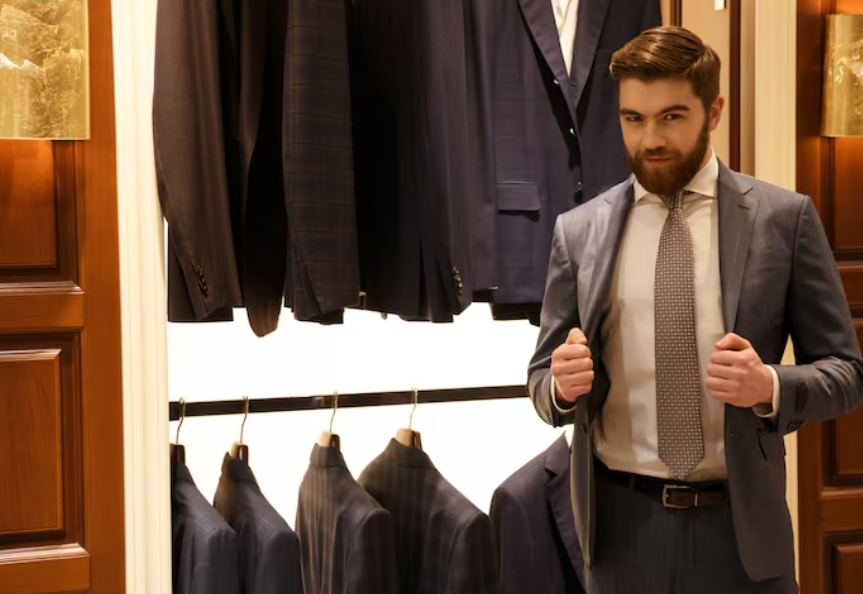
A three-piece suit should feel comfortable with the jacket buttoned and look tidy when you take it off. That means checking the waistcoat and trousers as carefully as the jacket. A good shoulder fit cannot hide a waistcoat that pulls, and neatly pressed trousers will still look awkward if the waistband sits too low.
The easiest way to choose is to try all three pieces together with a shirt and the shoes you plan to wear. Assess the outfit standing, sitting and walking. Wedding ceremonies, formal dinners and race days all involve more movement than a quick look in a changing-room mirror suggests.
Choose The Shape Before the Pattern
Slim, tailored and regular fits describe different cuts, but the labels are not identical across brands. A slim suit from one maker may fit differently from another. Use the product measurements and your own proportions rather than buying the same size automatically.
When comparing 3 piece suits for men, TruClothing brings together plain, checked and tweed options. Start with the silhouette you can move in, then decide how much pattern you want. A subtle herringbone can give a grey suit texture without the stronger effect of a large windowpane check.
Think about the occasions ahead, too. A plain navy or charcoal suit gives you room to change shirts and ties. A more distinctive check can be an appealing choice for someone who already owns a simple suit and wants a different look for celebrations.
Check The Jacket at The Shoulders and Chest
For a conventional fitted jacket, the shoulder line should sit close to your natural shoulder. Look for a smooth outline rather than a sleeve that collapses beneath an overhanging seam. If the shoulders are visibly wrong, try another size or cut before considering alterations.
Button the jacket while standing. The front should lie reasonably flat without deep diagonal creases pulling away from the fastening. Lapels that lift away from the chest can also indicate that the cut or size needs attention. Check the back in a second mirror, since pulling is not always obvious from the front.
Then sit down with the jacket unbuttoned. Reach forward as though you were shaking hands or picking up a glass. Some movement in the fabric is normal, but the jacket should not feel painfully tight across the upper back. Choosing an extremely close fit can make an otherwise smart suit uncomfortable during a long event.
Make Sure The Waistcoat Meets the Trousers
The waistcoat should cover the trouser waistband when you are standing naturally. A strip of shirt showing between the two usually means the waistcoat is too short, the trousers are sitting too low, or both. Pulling the trousers up temporarily will not solve the problem if they slide back down as you walk.
Fasten the waistcoat and look at the button line. The fabric should sit smoothly, with enough room to breathe and sit. Use the back adjuster for a modest adjustment rather than pulling it so tightly that the front wrinkles or the side seams move out of position.
On a conventional single-breasted waistcoat, the lowest button is usually left undone. Some designs are cut differently, so consider the shape of the garment rather than forcing a rule onto every style. Above all, the lower edges should fall naturally over the trousers.
Assess The Trouser Rise Before the Hem
Trouser rise is the distance between the crotch and waistband. It affects where the trousers sit and whether they work with the waistcoat. A low-rise pair may leave a gap even when the leg length is correct, which is why shortening the hem is rarely the first thing to assess.
The waistband should stay in place without being pulled sharply inward by a belt. Look for flat pockets and a comfortable seat. Pockets that flare open or fabric that strains across the thighs suggest you need more room or a different cut.
Once the upper fit works, check the hem over your intended shoes. A small break, where the fabric makes a slight fold above the shoe, is a useful starting point for traditional formalwear. Narrower trousers may suit a shorter finish. Avoid several folds collecting around the ankle, particularly if the suit already has a strong pattern.
Use The Shirt and Shoes to Test the Whole Outfit
A shirt that bunches beneath the waistcoat can make the suit look tighter than it is. Try a well-fitting shirt, tuck it in neatly and check the collar with your tie fastened. You should be able to turn your head comfortably without the collar digging in.
At the wrist, a small amount of shirt cuff can show beneath the jacket sleeve. Judge both sleeves with your arms resting naturally, rather than lifting them to inspect a watch. Bring your actual shoes to an alterations appointment so the trouser length is set against the right shape and sole height.
Plan Alterations Before the Occasion
Sleeve and trouser hems are common alteration requests, although what is possible depends on the garment construction. Shoulder changes and major adjustments to jacket length are more involved. Ask a tailor to assess the work before assuming that every fit problem can be corrected.
Allow time for the work and a final try-on. Wear the complete suit again after alterations, including the waistcoat, because changing one part can affect the balance of the rest. The aim is an outfit you can wear through the whole occasion with the same ease you felt at the fitting.